Why Hidden Building Gaps Can Become Pest Highways
Pests don’t always enter through an obvious hole. They often use tiny spaces where stucco meets masonry, concrete meets foundation walls, or pipes and wires pass through exterior surfaces. An experienced exterminator in Glendale AZ looks beyond visible activity to find these concealed routes and understand how building materials may be helping pests move, hide, and establish themselves.
Anteater Exterminating provides local pest control services in Glendale, AZ and approaches recurring activity by considering both the pest and the conditions supporting it. The company has operated since 1995, giving its technicians Extensive Experience with Arizona’s pest pressures and building environments.
An inspector examines joints, seams, cracks, utility penetrations, foundation connections, door thresholds, rooflines, wall voids, and other material interfaces where pests can travel unseen. These inspection services help reveal migration routes so treatment, exclusion techniques, habitat modifications, and other pest control solutions can be matched to the property’s actual conditions.
How Does an Exterminator in Glendale AZ Trace a Concealed Pest Route?
A building is made of many connected materials rather than a single continuous barrier. Stucco, concrete, block, wood, roofing, windows, doors, and utility components all meet at different points. Those interfaces can create narrow spaces that pests exploit as they move between outdoor habitats and indoor shelters.
In Glendale, AZ, the desert climate makes these inspections especially useful. Properties throughout Greater Phoenix may have irrigation systems, landscaped yards, masonry walls, concrete slabs, shaded exterior spaces, and openings around utility equipment. A pest may follow one of these features toward food, moisture, or protection. Conditions can vary from one property to another, particularly in the Sonoran Desert and in areas influenced by the White Tank Mountains.
A professional inspection looks for trails, droppings, damage, evidence of nesting, webbing, soil tubes, and repeated activity. It also considers how different ant species behave. Carpenter ants may use structural wood, while pavement ants and odorous house ants can exploit narrow cracks and protected joints. What may appear to be an isolated ant trail could actually point toward a concealed entry route.
People Also Ask: Can pests move through building walls? Yes. Depending on the species, pests may use wall voids, utility penetrations, cracks, insulation spaces, or gaps around structural materials. Identifying these routes is one reason professional inspection is more informative than simply treating only the areas where pests are visible.
Some Common Inspection Mistakes that Allow Pest Migration
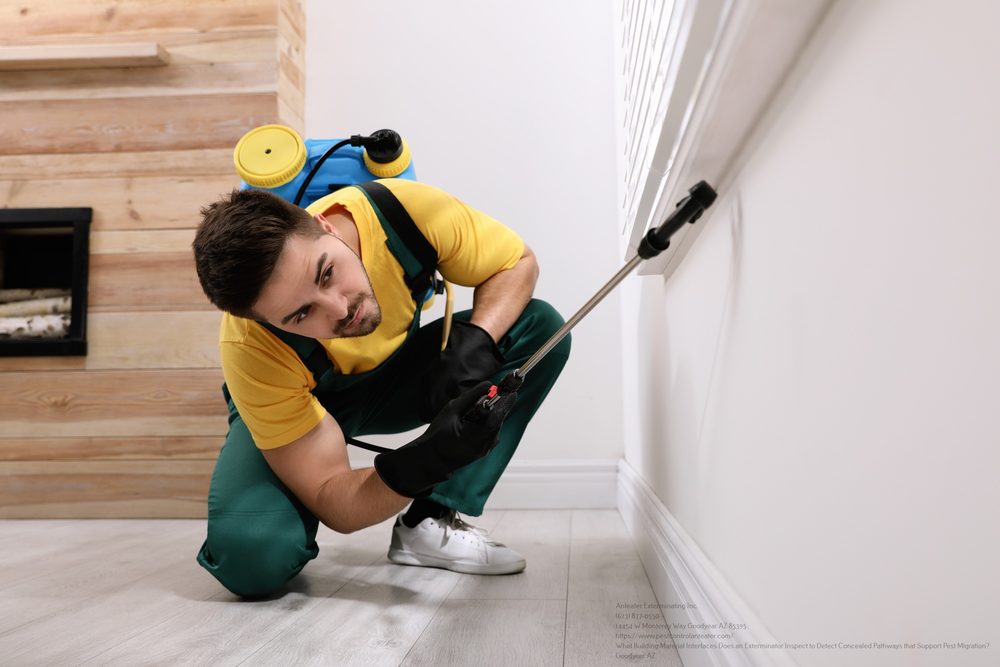
One common mistake is treating visible activity without investigating the underlying pathway. Another is overlooking tiny openings around pipes, electrical lines, vents, doors, windows, and HVAC equipment. A third is assuming that a sealed-looking joint remains sealed permanently, even though weather, movement, settling, and deterioration can create new gaps. These oversights can make a treatment plan less effective because the underlying route remains available.
Moisture is another frequently missed factor. Leaking plumbing, irrigation overspray, drainage problems, and condensation can make certain material interfaces more attractive to pests. The same inspection may reveal landscaping or clutter touching exterior walls, which can create shelter and easier access. Habitat modifications and sanitation techniques can therefore complement targeted pest treatment rather than relying solely on chemical applications.
Species identification also matters. Termite activity requires a different response from rodent control, ant treatment, or scorpion management. Termite control may involve a Termite Baiting System or another targeted approach, while rodents may require physical traps and exclusion techniques. Likewise, an Arizona bark scorpion or Black Widow may require attention to sheltered exterior areas rather than the same strategy used for ants.
The U.S. Environmental Protection Agency explains that integrated pest management uses monitoring, identification, prevention, and appropriate control methods rather than depending on a single treatment. This approach supports more informed pest control solutions, and Anteater Exterminating uses its local expertise to help property owners identify conditions contributing to recurring activity.
Need Expert Pest Control for Hidden Pest Pathways?
Contact Anteater Exterminating today for dependable pest control solutions.
What Should an Exterminator in Glendale AZ Inspect First?
A systematic inspection begins with pest identification and then follows evidence toward the structure. The technician considers where pests are appearing, when they appear, and what nearby building feature could connect that location to another area. This matters because the visible location isn’t necessarily the point of entry.
The process can be thought of in three connected stages. First, inspection identifies the pest and evidence of activity. Second, the technician examines structural interfaces and environmental conditions that could support movement. Third, the findings are incorporated into a treatment plan that may combine monitoring, targeted applications, exclusion, physical controls, or habitat changes.
For Glendale properties, technicians may pay particular attention to foundation joints, stucco transitions, block walls, window frames, door thresholds, roof-to-wall interfaces, utility penetrations, and areas where landscaping meets the structure. Could a narrow opening really matter? For small insects, it can. For rodents, larger gaps and vulnerable utility routes can become significant access points.
These principles also support IPM programs for commercial properties. Facility management teams may coordinate pest inspections with building maintenance, Janitorial Services, Security Services, or Medical Office Cleaning, but pest migration still requires specialized inspection and control. Fly management, rodent control, and other pest concerns can be influenced by structural openings, sanitation conditions, and access points.
What are the Key Pest Migration Lessons for Glendale Properties?
Building material interfaces deserve attention because they can connect outdoor pest habitat with concealed indoor spaces. Foundation joints, wall transitions, utility penetrations, doors, windows, rooflines, and deteriorated seams can all provide potential pathways depending on the pest involved.
A successful inspection considers the entire environment. Ant species, termite activity, rodents, scorpions, and other pests respond differently to food, moisture, shelter, temperature, and structural access. That’s why integrated pest management focuses on accurate identification, monitoring, prevention, and appropriate control rather than automatically applying the same method everywhere.
For property owners, the main lesson is simple: repeated pest sightings should prompt questions about how the pests are getting inside, where they’re sheltering, and which conditions are allowing them to remain. Those answers can lead to better pest control solutions and more practical long-term prevention for Glendale properties.
Why Anteater Exterminating is a Smart Choice for Glendale
We at Anteater Exterminating provide our customers with the best solutions by combining inspection, local expertise, targeted treatment, and prevention. Our Extensive Experience in Arizona since 1995 helps us understand how the desert climate, property construction, landscaping, and seasonal pest activity can influence concealed migration routes.
We showcase our excellent services through trained technicians, ongoing education, and a commitment to professional pest management. From inspection services and pest control to termite control and specialized Exterminator Services, our goal is to do an excellent job while addressing the conditions that allow pests to return.
Contact Anteater Exterminating for expert pest control services in Glendale, AZ, when concealed building pathways contribute to recurring pest activity. The right inspection can reveal where pests are entering, moving, and hiding, giving property owners a clearer path toward prevention and control. For dependable pest solutions from an experienced exterminator in Glendale AZ, Anteater Exterminating is ready to help.
Need Expert Pest Control for Hidden Pest Pathways?
Contact Anteater Exterminating today for dependable pest control solutions.