
Why Some Properties Keep Attracting Roof Rats and How the Right Environmental Changes Break the Cycle
One roof rat rarely arrives alone. When a property offers dependable shelter, water, and food, it can support an entire breeding population before homeowners even realize there’s a problem. That’s why roof rat control in Mesa AZ isn’t simply about removing rodents already inside a structure.
It’s about identifying and reducing the environmental conditions that allow colonies to survive and expand. Anteater Exterminating provides comprehensive rodent control solutions that focus on long-term prevention.
Sustainable roof rat elimination depends on reducing a property’s environmental carrying capacity. Professional inspections identify food sources, nesting areas, water availability, entry points, and surrounding landscape features so rodents can no longer establish stable populations or repeatedly invade nearby homes.
Why Environmental Carrying Capacity Determines Whether Roof Rats Stay Or Leave
Many people assume rodents appear randomly, but roof rats are remarkably selective. Scientists describe “environmental carrying capacity” as the number of animals an environment can continuously support based on available resources. For Rattus rattus, commonly called the Roof Rat, that means reliable food, secure nesting areas, nearby water, and protected travel routes.
Mesa’s neighborhoods naturally provide many of these conditions. Mature landscaping, irrigated lawns, citrus trees, decorative vegetation, and dense residential developments throughout the East Valley create ideal habitats. Add abundant pet food, overflowing bird feeders, compost piles, and accessible trash bins, and roof rats have little reason to leave.
A common People Also Ask question is: Why Do Roof Rats Continue Returning After They’ve Been Removed?
Because the environment hasn’t changed.
Removing rodents without eliminating attractants is much like emptying water from a leaking bucket without repairing the hole. If food sources, shelter, and access remain available, new rats occupy the same territory.
Anteater Exterminating evaluates far more than visible rodent activity. Its specialists examine surrounding vegetation, structural vulnerabilities, irrigation practices, and neighboring conditions that influence long-term rodent pressure throughout Maricopa County.
Five Hidden Environmental Mistakes that Encourage Roof Rat Populations
Many recurring infestations stem from everyday property conditions rather than isolated incidents. Could one of these issues be attracting rodents without anyone realizing it?
1. Constant Food Availability
Roof rats thrive wherever dependable meals exist. Fallen citrus fruit, overflowing garbage containers, exposed livestock feed, uncovered pet food, and backyard bird feeders all become dependable food sources.
Even small amounts of food available each evening can sustain an expanding colony.
2. Dense Landscaping and Untouched Nesting Areas
Untrimmed shrubs, climbing vines, stacked lumber, moving boxes, storage sheds, and neglected vegetation create ideal nesting areas. Dense landscaping also protects rodents from predators while allowing colonies to expand unnoticed.
3. Easy Structural Access
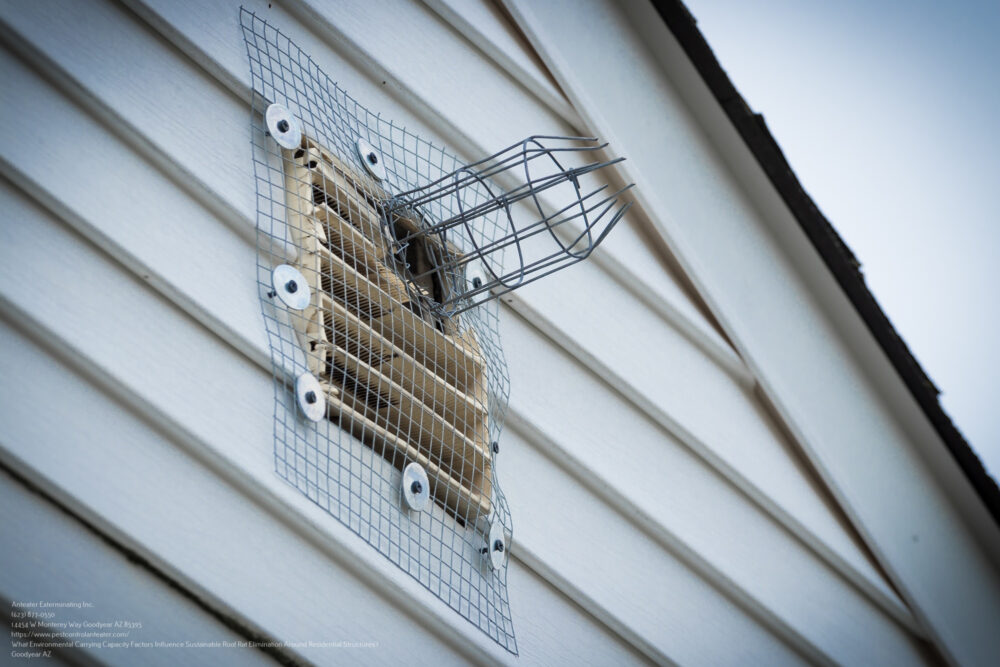
Tiny entry points, roof intersections, damaged vents, tile-roof gaps, and utility penetrations often allow rodents to enter attics without visible damage from the ground.
4. Unmanaged Water Sources
Leaking irrigation systems, dripping outdoor faucets, clogged gutters, standing water, and damaged irrigation lines provide consistent moisture. Even Arizona’s dry climate doesn’t prevent infestations when dependable water remains available.
5. Ignoring Early Warning Signs
Small clues often appear weeks before homeowners notice rodents inside.
Common indicators include:
- Rat droppings
- Gnaw marks
- Noises in the attic
- Visual sightings
- Unsettled pets
- Damage to plastics
- Hollowed-out citrus fruit
Ignoring these early indicators allows populations to reproduce rapidly before intervention begins.
Anteater Exterminating helps homeowners identify these environmental issues during detailed property evaluations, allowing correction before infestations become significantly larger.
According to the Centers for Disease Control and Prevention, reducing food, water, and shelter is one of the most effective long-term strategies for rodent prevention, alongside professional exclusion and sanitation measures.
Need Expert Roof Rat Control for Your Home?
Contact Anteater Exterminating today to schedule your professional rodent inspection and protect your property.
How Roof Rat Control in Mesa AZ Benefits from Property-Specific Environmental Analysis
Every neighborhood presents different environmental pressures.
Homes near mature landscaping, irrigation canals, golf courses, or agricultural edges often experience higher rodent movement than properties surrounded by newer developments. Communities near Queen Creek, portions of Pima County, and growing residential corridors may experience changing rodent behavior as development alters natural habitats.
This is why roof rat control in Mesa AZ begins with understanding each property’s environmental profile instead of immediately deploying traps.
Professional inspections evaluate:
- Nearby food source availability.
- Tree canopy connections.
- Irrigation patterns.
- Existing bait stations.
- Structural vulnerabilities.
- Evidence of previous rat extermination attempts.
- Rodent travel corridors between neighboring properties.
Rather than focusing solely on visible rodents, professionals determine why the property continues to support them.
Could neighboring yards also contribute to recurring infestations? Often, yes. Environmental carrying capacity extends beyond individual property lines, making neighborhood awareness an important component of sustainable rodent management.
Four Practical Prevention Strategies that Reduce Long-Term Rodent Pressure
Long-term success depends on reducing resources rather than constantly reacting to new infestations.
Professional recommendations commonly include:
- Removing accessible food sources, securing trash, and storing feed in sealed containers.
- Installing steel wool and durable exclusion materials around small structural openings while repairing utility penetrations.
- Eliminating overgrown vegetation and reducing the number of protected nesting locations around the home.
- Combining carefully planned baiting strategies, professional trapping system placement, and ongoing monitoring as part of integrated population control.
These improvements work together to lower the environmental carrying capacity that allows roof rats to thrive.
Key Takeaways Every Mesa Property Owner Should Remember
Environmental carrying capacity determines whether roof rats pass through a neighborhood or establish permanent colonies. Sustainable roof rat control in Mesa, AZ, succeeds by reducing available shelter, food, water, and access rather than relying solely on removal techniques.
Important points include:
- Inspect properties regularly for gnaw marks, droppings, and unusual attic sounds.
- Remove accessible food, including fallen fruit and uncovered pet food.
- Seal structural openings using durable exclusion materials rather than temporary fillers.
- Maintain trees and landscaping to reduce rodent travel routes.
- Schedule professional inspections before minor warning signs develop into large infestations.
When these practices are combined with professional expertise, homeowners significantly reduce future infestations while protecting both their homes and surrounding neighborhoods.
Why Anteater Exterminating is the Smart Choice for Lasting Roof Rat Protection
We at Anteater Exterminating provide the best solutions to our customers by focusing on long-term rodent prevention instead of temporary fixes. Our experienced team carefully evaluates every property to understand the environmental conditions that allow roof rats to survive and recommends customized strategies designed for lasting results.
We proudly provide dependable rodent control, detailed inspections, exclusion work, and preventative recommendations that help homeowners protect their investments. Our environmentally responsible approach emphasizes sustainable solutions that reduce recurring infestations without unnecessary treatments.
If you’ve noticed attic noises, droppings, damaged insulation, or signs of rodent activity around your property, don’t wait for the problem to grow. Contact Anteater Exterminating today for expert rodent control services. Let our professionals help restore your peace of mind with dependable roof rat control in Mesa AZ.
Need Expert Roof Rat Control for Your Home?
Contact Anteater Exterminating today to schedule your professional rodent inspection and protect your property.