Could Hidden Moisture Be the Reason Ants Keep Coming Back?
An ant trail across a kitchen counter may look like a simple food-seeking problem, but the real colony could be protected somewhere much harder to see. Professional ant control in Chandler AZ can evaluate moisture, food access, shelter, soil conditions, structural openings, and nesting materials to narrow down where colonies are established and why they continue surviving.
Ants often take advantage of small environmental opportunities that make a property easier to navigate and support colony activity. Cracks around foundations, gaps near doors and windows, vegetation touching structures, irrigation moisture, and food residue can create dependable routes between nesting areas and indoor resources.
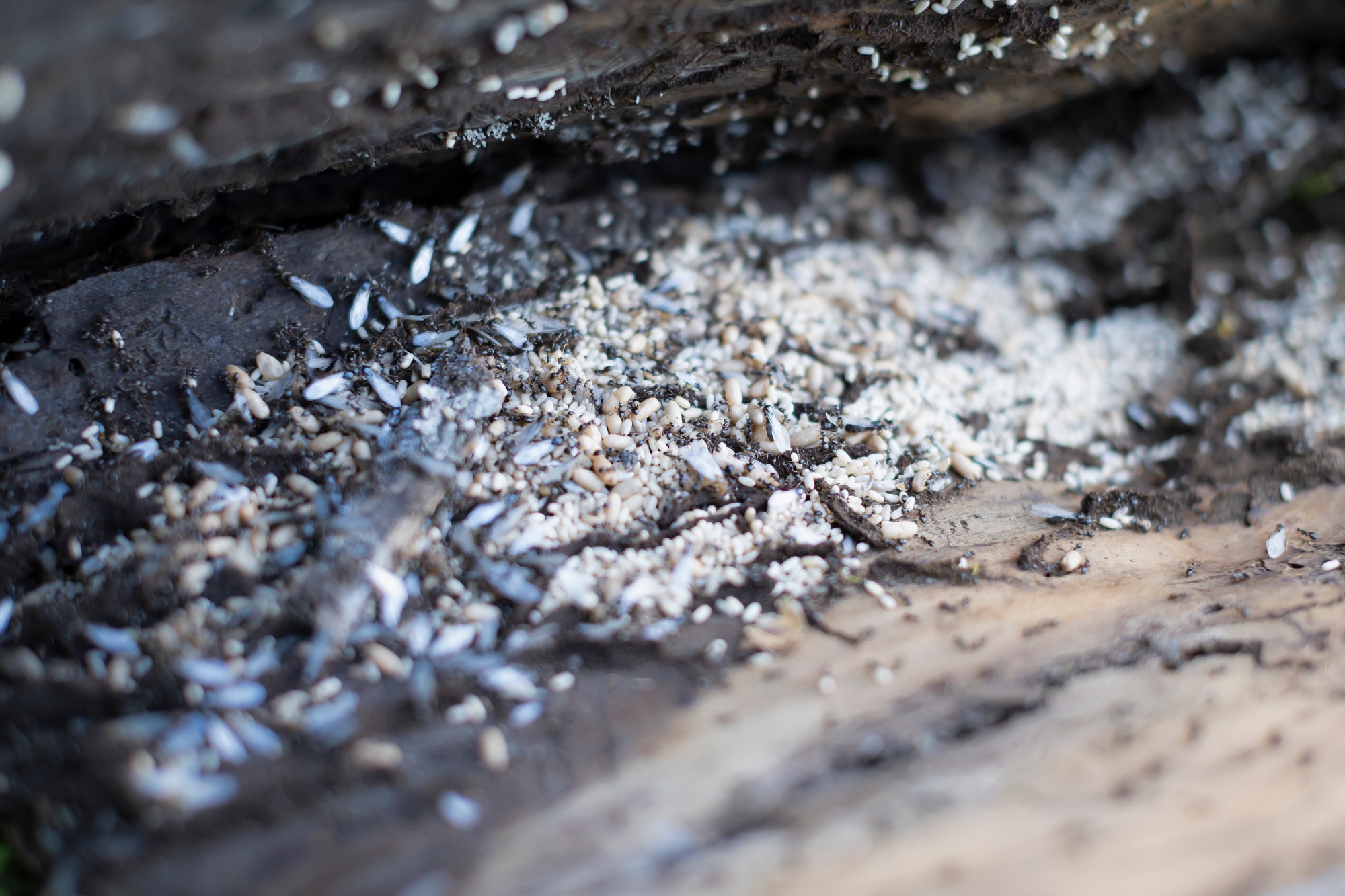
Nesting locations can also vary depending on the ant species and conditions available around the property. Some colonies may remain in soil or landscaping, while others can establish nests near structural features that protect from heat and disturbance.
How Does Ant Control in Chandler AZ Trace a Colony Back to Its Nest?
Ant colonies rarely choose nesting locations at random. Different ant species respond to specific combinations of moisture, temperature, food, protection, and access. Some remain outdoors beneath soil, mulch, stones, or vegetation, while others can exploit wall voids, damaged wood, plumbing spaces, foundations, and other protected areas. UC IPM notes that ants commonly select locations near moisture and food, including areas around buildings, plants, sidewalks, wood, and leaking plumbing.
That makes nest-site selection an important part of ant treatment. Carpenter ants, pavement ants, odorous house ants, and fire ants don’t necessarily respond to the same environmental conditions, so identifying the ant species can change the inspection strategy. People Also Ask: How do pest exterminators find an ant nest? One of the most useful clues is a consistent trail. Following worker activity can reveal where ants enter, where they disappear, and which moisture or structural resources may be sustaining the colony.
Chandler’s desert climate adds another layer to the problem. Irrigated landscaping, leaking outdoor fixtures, shaded areas, mature trees, and moisture around foundations can create small pockets that differ greatly from the surrounding Sonoran Desert. In the wider Phoenix Area and Maricopa County, these localized resources can become important to Arizona pests even when outdoor conditions are otherwise hot and dry.
6 Nest-Site Mistakes that Can Keep an Ant Colony Hidden

- One common mistake is treating every visible ant as the main problem. Workers are often foragers, meaning the colony may be somewhere else. Spraying the trail without determining where the ants are coming from can therefore provide only temporary relief.
- Another mistake is overlooking moisture. A slow plumbing leak, damp soil beside a foundation, irrigation overspray, or condensation can create conditions that make an otherwise unsuitable area attractive. Structural resources matter, too. Cracks, wall voids, damaged wood, insulation gaps, landscaping materials, and openings around pipes can provide protected routes into or beneath a building.
- A third mistake is focusing only on food. Ants need more than crumbs or spilled sugar. Colonies also need shelter and suitable conditions for brood development.
- A fourth mistake is disturbing potential nesting areas before inspection, which can cause some colonies to relocate and make the original nest harder to trace.
- A fifth mistake is confusing recurring activity with a completely new infestation. Ants may establish satellite nesting areas or shift locations when environmental conditions change.
- A sixth is assuming that stronger treatment automatically produces better results. The U.S. Environmental Protection Agency recommends integrated pest management because effective pest management begins with accurate identification, monitoring, prevention, and the selection of appropriate controls, rather than relying on a single method.
Anteater Exterminating approaches pest problems with inspections and targeted pest control solutions rather than treating every property the same way. Its local experience helps technicians consider both the pest and the conditions supporting it.
Looking For Reliable Ant Control?
Contact Anteater Exterminating today for professional pest solutions.
How Can a Professional Treatment Plan Prevent Repeat Ant Activity?
Once likely nesting resources are identified, the treatment plan can be built around the findings. An initial treatment may target active areas, while follow-up work focuses on entry points, harborage modification, sanitation, moisture reduction, and other preventive measures. Physical controls and liquid perimeter barriers may be appropriate in some situations, depending on the pest and property.
For long-term protection, recurring pest prevention plans can help monitor changing conditions rather than waiting until a severe infestation occurs. The goal isn’t simply to create a temporary reduction in the number of visible ants. It’s to make the property less attractive and less accessible to future colonies.
The same principle applies across pest extermination services. Termite control may involve a termite inspection and, where appropriate, a soil barrier or other termite treatment strategy. Rodent control may use exclusion and physical traps. Bed bug control can involve specialized bed bug remediation, including heat treatments in suitable situations. Other pest concerns, such as fly management, spider extermination, wasp extermination, mosquito extermination, bee removal, and bird control services, require their own inspection and control considerations rather than being folded into an ant treatment.
What Should Homeowners Remember Before Calling for Ant Control in Chandler AZ?
The strongest clue isn’t always the largest number of ants. A recurring trail beside a damp area, a concentration near a structural opening, or activity that follows irrigation may reveal more about the colony’s needs than a single visible swarm.
It also helps to distinguish professional pest management from loosely used terms such as “systemic pest infection,” which isn’t a standard technical description of an ant infestation. Professionals generally discuss infestation, colony activity, harborage, life cycle, and environmental conditions. That clearer language supports better inspections and treatment decisions.
Homeowners should also remember that other pests can share similar access points. Termite control, WDI reports, termite inspection, subterranean termite treatment, and related termite services address a different biological problem from ant control, even when both pests are found around the same foundation. Likewise, bed bugs, fleas & ticks, Carpet and Flour Beetles, and other pests shouldn’t be treated as though they have identical nesting behavior.
Anteater Exterminating has operated in Arizona since 1995 and describes itself as a family-owned, locally operated pest control company with more than 30 years of experience. Its Mesa service page states that technicians provide customized pest management solutions, thorough inspections, targeted treatments, and ongoing maintenance for residential and commercial properties.
Why Anteater Exterminating is a Smart Choice for Chandler Pest Control
We at Anteater Exterminating provide the best solutions to our customers by looking beyond the ants that are easiest to see. Our approach considers moisture, nesting resources, entry points, environmental conditions, and the behavior of different ant species so customers can receive a more informed treatment plan.
We showcase our excellent services through thorough inspections, practical pest-defense strategies, and customized pest-control solutions for Arizona properties. Our ongoing education and local expertise help our team stay attuned to evolving pest pressures while maintaining a strong focus on customer service and excellence.
From carpenter ants and pavement ants to odorous house ants and other Arizona pests, the right response begins with understanding why a colony has selected a particular location. Contact Anteater Exterminating for professional ant control in Chandler and dependable pest management solutions. For targeted inspections, practical prevention, and professional ant control in Chandler AZ, contact Anteater Exterminating today.
Looking For Reliable Ant Control?
Contact Anteater Exterminating today for professional pest solutions.